Why Choose a Kitchen Table for Your Home?

Why Choose a Kitchen Table for Your Home?

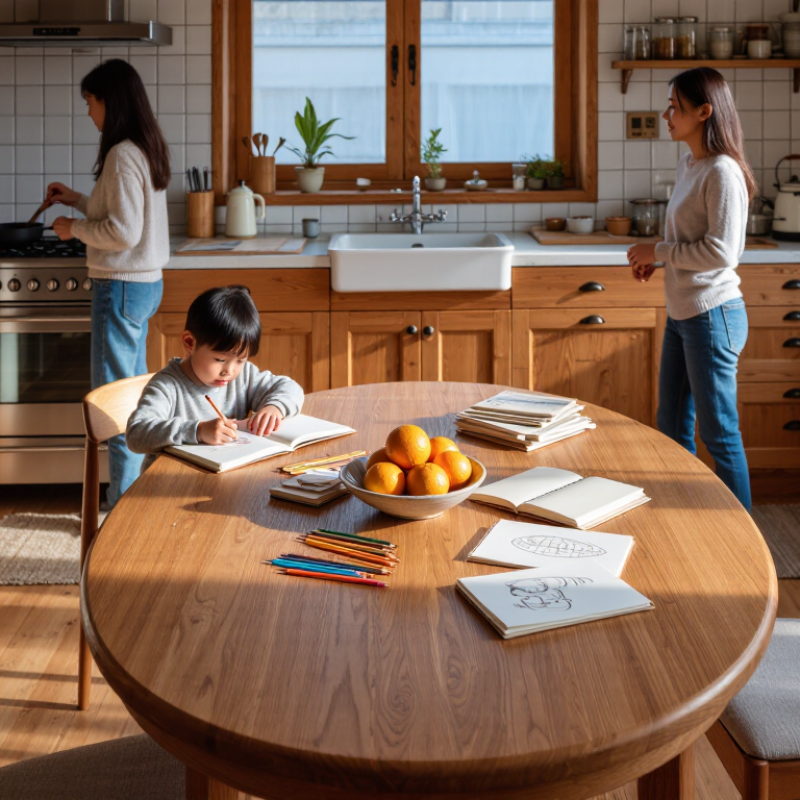
A kitchen table can make a kitchen feel like a place to pause, not just a room for preparing meals. It offers a practical surface for breakfast, homework, shared recipes, and the small conversations that happen between busy moments. Picture a bowl of oranges beside a stack of mail, or a child drawing while dinner simmers. These ordinary scenes are part of its appeal. A well-chosen table earns its space through daily use.

Interior designer Nate Berkus has said, “Your home should tell the story of who you are, and be a collection of what you love.” A kitchen table can reflect that idea without demanding a dramatic makeover. Wood brings visible grain and warmth; a compact round table can soften a tight corner. The right choice depends on the room, the household, and how people actually live. That matters.

Before choosing, measure the floor area and leave enough room to pull out chairs comfortably. Consider wipe-clean finishes if spills are common, and think about whether the table must serve more than one purpose. A beautiful table that blocks a walkway may become frustrating. I may be romanticizing the everyday meal a little; schedules do not always line up, and some kitchens are simply too small. Still, a thoughtfully sized kitchen table can make routine moments easier and give a home a natural gathering point.
Why Choose a Kitchen Table for Your Home?

Define the Kitchen Table’s Role in Everyday Home Use

A kitchen table is less a centerpiece than a working surface for daily routines. It holds breakfast bowls, grocery lists, homework, and the laptop opened between chores. The U.S. Bureau of Labor Statistics’ 2023 American Time Use Survey reports that people aged 15 and older spent about 1.24 hours per day eating and drinking on an average day. The survey does not say where those meals happen, but it shows how often eating fits into everyday life. A table nearby can make shared meals and quick snacks easier.

Small rituals matter. A child can finish a worksheet while dinner cooks; someone else can sort mail beside a cup of tea. For the table to work, leave enough room to pull out chairs without blocking the refrigerator or a main walkway. Match its size to the household, not an idealized dining scene. In a compact kitchen, a round or drop-leaf table may keep movement easier. Still, the table can become a clutter magnet. Mine would, unless someone cleared it most evenings. That practical flaw is worth considering when choosing its location and surface.

Compare Table Shapes, Materials, and Seating for Different Household Needs

Why Choose a Kitchen Table for Your Home?

A kitchen table can make everyday meals feel less hurried. Shape matters. A round table helps conversation and avoids sharp corners in tight walkways. A rectangular table fits narrow rooms and can seat extra guests along its sides. The U.S. Census Bureau’s 2020 Census reported an average household size of 2.5 people, but your daily seating needs may differ. Count regular diners, then leave room for the occasional visitor.

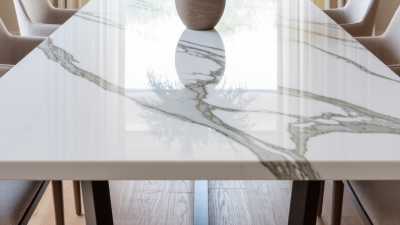
Material affects upkeep as much as appearance. Solid wood can be refinished, though it may show scratches and react to moisture. Laminate wipes clean quickly, but damaged edges are harder to repair. Glass keeps a small room visually open; fingerprints are the trade-off. The National Kitchen & Bath Association’s kitchen-planning guidance allows about 24 inches of table edge per diner. Measure chairs in use, too. A chair pulled back needs space, and a floor plan can still feel cramped in real life.

Tips: Tape the table’s footprint on the floor. Walk around it with chairs pulled out. Check the finish sample beside your actual kitchen light; I’ve found colors can look unexpectedly different at home.

Plan Table Placement Around the NKBA’s 36-Inch Traffic-Aisle Guideline

A kitchen table can make an everyday room feel welcoming, but its position matters as much as its size. The NKBA’s 36-inch traffic-aisle guideline is a useful planning reference. Measure the clear walking route around the table, not just the gap between its edge and a wall. Keep that route open when chairs are occupied, especially near a refrigerator, pantry, or doorway.

Try this at home. Mark the table’s footprint with painter’s tape, then add the space needed to pull out each chair. Measure the narrowest passage from there. A 36-inch aisle may feel comfortable in one layout and cramped in another, depending on door swings, chair shapes, and how people move through the room. Walk the route while someone sits at the table. Carry a plate, too. It sounds fussy, but it can reveal awkward corners.

If the main path repeatedly narrows below the guideline, consider a smaller table or a different orientation. A round top may ease movement around corners, though it still needs room for chairs. Take measurements with the table in use, not just when the room is empty. My own first layout looked generous on paper; the pulled-out chairs told a less flattering story.

Why Choose a Kitchen Table for Your Home? — Plan Table Placement Around the NKBA’s 36-Inch Traffic-Aisle Guideline

Planning Dimension Useful Measurement How It Helps Plan a Kitchen Table
Clear traffic aisle At least 36 in (914 mm) Keep this clear width along a traffic route beside the table, measured between the nearest fixed or movable obstructions.
Kitchen work aisle for one cook At least 42 in (1,067 mm) Where the route also serves as a work aisle between counters or appliances, allow more space than the basic traffic-aisle guideline.
Kitchen work aisle for multiple cooks At least 48 in (1,219 mm) A wider work aisle helps people pass and work when more than one cook may be in the kitchen at the same time.
Typical dining-table height About 28–30 in (711–762 mm) This common dining-table height range can help when checking table proportions against dining chairs and nearby counters.
Tabletop width per diner Plan about 24 in (610 mm) per person along the table edge This practical seating allowance helps estimate how many people can sit comfortably along each side; actual needs vary with chair size and place settings.
Table placement check Measure with chairs in their usual positions Include the space occupied by pulled-out chairs when checking whether the route remains usable during meals.

Use the 36-inch measurement for a traffic aisle, not as a substitute for a wider kitchen work aisle where cooking activity takes place. Confirm clearances in the actual room before choosing a table.

Assess Seating Comfort Using the Common 28–30-Inch Table-Height Range

A kitchen table usually stands about 28 to 30 inches high, but that range alone cannot guarantee comfortable seating. The chair matters just as much. A seat around 17 to 19 inches high often leaves roughly 10 to 12 inches between the seat and tabletop, giving most adults room for their legs. Still, body proportions vary. Check the actual measurements before choosing a set.

Try sitting at a table similar in height, if possible. Your feet should rest comfortably on the floor, and your knees should slide beneath the top without pressing against its underside. There should be space to pull a chair in and out. Notice your shoulders, too: if they rise while you eat or write, the table or chair may be a poor fit. Small details matter. A thick tabletop can reduce leg clearance, even when the listed height looks standard. I once assumed a familiar chair would suit every table; it did not. Measure the seat and tabletop, then test the combination with the way you actually sit.

Why Choose a Kitchen Table for Your Home?

Matching Chair Seat Height to a 28–30-Inch Table

As a general guideline, a comfortable table-to-seat clearance is about 10–12 inches. Subtracting that clearance from the table height gives the suggested chair seat-height ranges shown above. Individual comfort can vary, so try the pairing when possible.

Compare Table Materials by Durability, Maintenance, and Household Cost

Why Choose a Kitchen Table for Your Home?

Compare Table Materials by Durability, Maintenance, and Household Cost

A kitchen table handles more than meals. It may hold homework, hot mugs, grocery bags, and the occasional spill. Solid wood can last for years and often be repaired, but it may need periodic oiling or refinishing. Scratches are visible. So is water damage if spills sit too long. Lower-cost engineered wood can look convincing, though moisture may weaken its edges over time.

Laminate is usually budget-friendly and easy to wipe clean, making it practical for busy households. Deep cuts and heat can damage its surface, and repairs are limited. Glass resists stains and does not absorb odors, but fingerprints show quickly; a quick wipe becomes part of daily upkeep. Stone feels sturdy and handles heat well, yet it is heavy and may require sealing. Installation and replacement can raise the household cost. I would not choose a surface by purchase price alone. Small maintenance costs add up.

Tips: Match the material to your routine. Check whether the finish needs sealing, and use coasters under hot or wet items. If children use the table, rounded corners and a wipeable surface may matter more than a flawless appearance. A modest scratch can be annoying, but it is not always a reason to replace a table.

The Health & Safety of our Community is Our Priority For this reason, we will be changing our business hours to:

MON - SAT • 12pm - 5pm

Or by appointment

We will communicate any updates through our social media and other regular mediums. Thank you for being a loyal customer!

Learn More

Top The owner of this website has made a commitment to accessibility and inclusion, please report any problems that you encounter using the contact form on this website. This site uses the WP ADA Compliance Check plugin to enhance accessibility.