What Is the Best Marble Dining Table from China?
Choosing the best marble dining table from China requires more than comparing photographs and factory prices. China remains a major force in global furniture manufacturing and exports, according to CSIL’s World Furniture Outlook 2024. However, production scale does not guarantee consistent stone quality. A dining table may look identical online, yet its marble can differ in veining, density, surface treatment, and repair history.
The right evaluation starts with measurable details. The Natural Stone Institute recommends examining slab selection, finishing quality, edge safety, and installation conditions. ASTM C503 also provides relevant requirements for marble used in architectural applications, including physical performance and dimensional consistency. Ask suppliers for stone origin, water absorption results, thickness tolerances, and photos taken under natural light. Check whether the top uses a full slab or several bonded pieces. That difference becomes obvious around the table edge.
Packaging deserves equal attention. A 2023 report from Smith Leonard noted continued pressure on global furniture supply chains, including freight delays and changing import costs. Strong crates, corner protection, moisture barriers, and clear inspection records can prevent expensive surprises. Still, no ranking is perfectly universal. A premium Italian-look surface may not suit a family with young children, while a softer honed finish may show marks quickly. The best marble dining table from China is therefore the one matching your room, maintenance habits, budget, and quality expectations. Ask difficult questions. Request samples. A polished showroom image is only the beginning.
Types of Marble Dining Tables Made in China
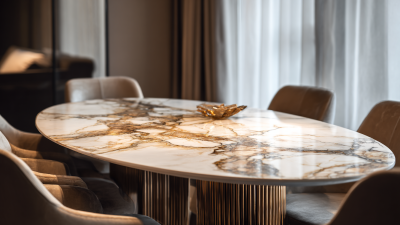
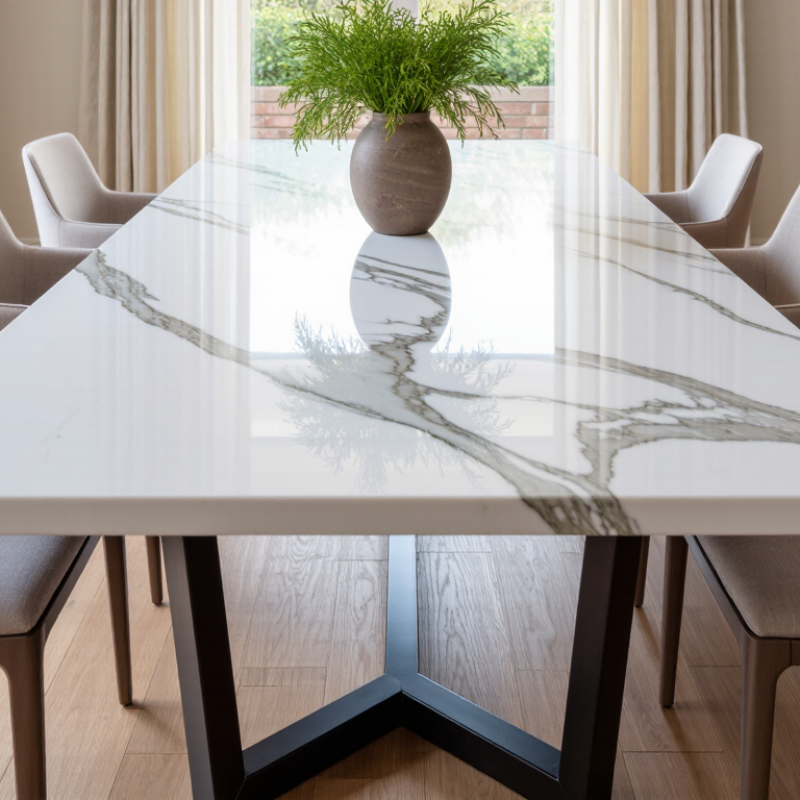
China produces several types of marble dining tables, each offering a different balance of beauty, weight, and maintenance. Natural marble tables use slabs quarried from China or imported stone. Their veining is unique, like soft grey branches across a pale surface. Common choices include white, beige, grey, and darker marbles. Every slab differs, so matching a sample perfectly can be difficult.
Marble veneer tables place a thin natural stone layer over a stable wood or composite base. They look luxurious but weigh less than solid stone. Sintered stone tables offer another practical option. They imitate marble patterns and resist stains, heat, and scratches more effectively. However, the printed pattern may look less natural from the edge. Solid marble feels impressive, but moving it requires careful planning. I once underestimated the weight of a round top. That mistake was expensive and avoidable.
Tips: Ask for slab photos, edge details, and thickness measurements before ordering. Confirm whether the surface is sealed, and request a care guide. Check the frame material, because a beautiful top can still rest on weak support. For daily dining, a honed finish may hide fingerprints better than polished stone. Also inspect the underside and joints. Small details often reveal manufacturing quality. If color consistency matters, approve the exact slab before production, not only a digital image.
What Is the Best Marble Dining Table from China? - Types of Marble Dining Tables Made in China
| Marble Type |
Typical Appearance |
Common Table Styles |
Key Advantages |
Care Requirements |
Best Use |
| White Marble |
White or soft ivory background with subtle gray veins |
Modern, minimalist, oval, round, and pedestal tables |
Brightens dining areas and coordinates with many interior styles |
Needs prompt cleaning of wine, coffee, oil, and acidic spills |
Light and contemporary interiors |
| Black Marble |
Deep black, charcoal, or dark gray surface with white or golden veining |
Luxury, contemporary, rectangular, and metal-base tables |
Creates a dramatic focal point and hides minor everyday marks |
Dust and water spots may be visible; regular sealing is recommended |
Formal dining rooms and statement spaces |
| Gray Marble |
Light to medium gray base with linear or cloudy veining |
Industrial, Scandinavian, modern, and extendable tables |
Balanced color that works well with wood, black, and brushed metal |
Use pH-neutral cleaners and avoid abrasive scouring products |
Everyday family dining |
| Beige or Cream Marble |
Warm cream, beige, or honey tones with soft natural movement |
Traditional, transitional, farmhouse, and rounded tables |
Adds warmth and visually complements natural wood furniture |
Sealing helps reduce absorption from food and beverages |
Warm residential interiors |
| Green Marble |
Green shades ranging from pale sage to deep forest with contrasting veins |
Boutique, vintage, luxury, and accent dining tables |
Offers a distinctive color and strong decorative character |
Color variation should be reviewed before production; protect from acids |
Feature dining areas |
| Sintered Stone with Marble Pattern |
Printed or veined surface designed to resemble natural marble |
Slim-profile, contemporary, compact, and extendable tables |
High resistance to stains, heat, scratching, and daily wear |
Usually low maintenance; inspect edges for impact damage |
Busy homes and commercial dining areas |
Selection Guide: For a timeless appearance, white or gray marble is a practical choice. Black and green marble are suitable for statement interiors, while beige marble adds warmth. If easy maintenance and high resistance to daily wear are the main priorities, a marble-patterned sintered stone table may be the better option.
Key Marble Qualities and Material Standards
Choosing the best marble dining table from China starts with measurable material quality, not dramatic veining. The 2024 Natural Stone Institute technical guidance identifies water absorption, flexural strength, abrasion resistance, and staining as practical selection points. For a dining table, low absorption matters because wine, tea, and cooking oils can enter open pores. Ask for laboratory results based on ASTM C97, ASTM C99, or EN 13755 methods.
Look closely at the slab edge. Dense marble should feel cool, compact, and consistent, without powdery seams or resin-filled cracks. ASTM C503 covers marble dimension stone, while EN 1469 addresses natural stone products used for cladding and related applications. These standards do not automatically make every slab suitable for furniture. The fabricator should still test the actual batch. A report showing water absorption below 0.5% is encouraging, but it is not a universal guarantee. Some attractive marbles remain more porous.
Professional inspection should include a 24-hour stain test, a visible-light color check, and measurement of slab flatness. Natural Stone Institute installation guidance also emphasizes sealed surfaces and suitable cleaning products. Factory photographs help, but they can hide repairs. I have found small edge chips more revealing than polished showroom faces. That is an imperfect method, and it deserves caution. Request the quarry origin, thickness tolerance, resin disclosure, test date, and a sample matching the finished table before approving production.
How to Choose the Right Table Size and Design
Choosing the best marble dining table from China starts with accurate measurements, not dramatic veining. Start with the room, not the stone. Leave at least 90 centimetres between the table edge and nearby walls or chairs. This allows comfortable movement and chair placement. For four diners, a round table measuring 100–110 centimetres usually works well. A rectangular table around 140–160 centimetres long can seat six people, depending on chair width.
According to Grand View Research, the global natural stone market was valued at approximately 51.5 billion U.S. dollars in 2023, with continued growth expected through 2030. This demand has encouraged Chinese manufacturers to offer more marble colors, edge profiles, and custom dimensions. However, larger does not always mean better. A 180-centimetre table may look impressive in a showroom but feel crowded in a compact dining room. Measure the chair footprint, walkway, and pendant-light position together. I once underestimated chair clearance by several centimetres. It was inconvenient, and avoidable.
Design should match daily use. Polished marble reflects light and creates a formal appearance, while honed finishes feel softer and hide minor marks more effectively. Oval and round designs improve circulation around tight corners. Rectangular tables suit long rooms and larger gatherings. Ask for the slab’s thickness, backing structure, sealing method, and weight before ordering. Natural marble varies in porosity and pattern, even within the same batch. Request clear photographs of the actual slab, not only a catalogue sample. That small detail can prevent a disappointing mismatch.
Manufacturing Quality, Craftsmanship, and Safety Features
A quality marble dining table from China begins with disciplined material selection. Reliable manufacturers record the quarry source, slab grade, thickness, and repair history. I look for slabs with consistent veining, no deep fissures, and a dry, even underside. A 20–30 millimeter top usually feels substantial, but thickness alone proves little.
Craftsmanship appears at the edges. Skilled workers create smooth profiles without sharp corners or exposed resin patches. The surface should show uniform polishing, clear veins, and sealed pores around the edges. Ask for water, stain, and load-testing records. Photos help, but physical samples reveal more. A small coffee-ring test can expose weak sealing.
Safety deserves equal attention. The base must sit flat on an uneven floor, with secure connections between stone and frame. Wide supports reduce rocking, while rounded corners lower impact injuries. Adjustable feet and anti-tip fittings improve daily stability, especially in homes with children. Check the adhesive and coating documents for emissions information. Packaging also matters; foam corners, reinforced crates, and moisture barriers can prevent hidden damage during shipping.
One detail is easy to overlook: polished marble can become slippery when wet. Sealing reduces absorption, but it does not make the stone stain-proof. I would request independent inspection before shipment, although inspection cannot replace local safety checks. Even excellent workmanship may include slight color variation. That is natural stone, not necessarily a defect.
This evaluation framework uses a 100-point weighting model for comparing marble dining tables manufactured in China. Stone selection and structural engineering receive the highest weights because marble is heavy, brittle, and sensitive to uneven support. Surface finishing, edge treatment, and final inspection also contribute significantly to long-term durability and user safety.
Comparing Chinese Marble Dining Tables by Value and Durability
What Is the Best Marble Dining Table from China?
Value and durability should guide the choice, not appearance alone. The 2023 International Trade Centre Trade Map lists China as a major exporter under HS 6802, with exports exceeding US$3 billion. This scale supports competitive pricing, but it also creates uneven quality. Some tables use thick, well-selected slabs. Others rely on thinner marble, resin fillers, or weak frame joints.
Marble is durable, but it is not maintenance-free. ASTM C97 measures water absorption, while ASTM C170 evaluates compressive strength. ASTM C880 tests flexural strength. Ask the supplier for recent test results and slab thickness. A 20-millimetre top with proper reinforcement may cost less, yet it can feel less stable than a 30-millimetre top. Edge polishing, steel supports, export packaging, and replacement policies also affect real value. The USGS 2024 Mineral Commodity Summaries identifies China as one of the leading dimension-stone producers, supporting its manufacturing capacity. Still, capacity is not craftsmanship.
Tips:
Request a close-up of the veining, underside, joints, and edge finish. Test the sealant with a small water drop. Acidic drinks can dull polished marble quickly. My first comparison focused too heavily on price. That was a mistake. A table with dramatic veining may need more repairs, especially around a busy dining area. Check the delivered cost, not only the factory quotation. Ask whether the stone is natural marble, composite material, or repaired stock. Suppliers should explain these differences clearly.