

What Are the Top Types of Dining Chairs?
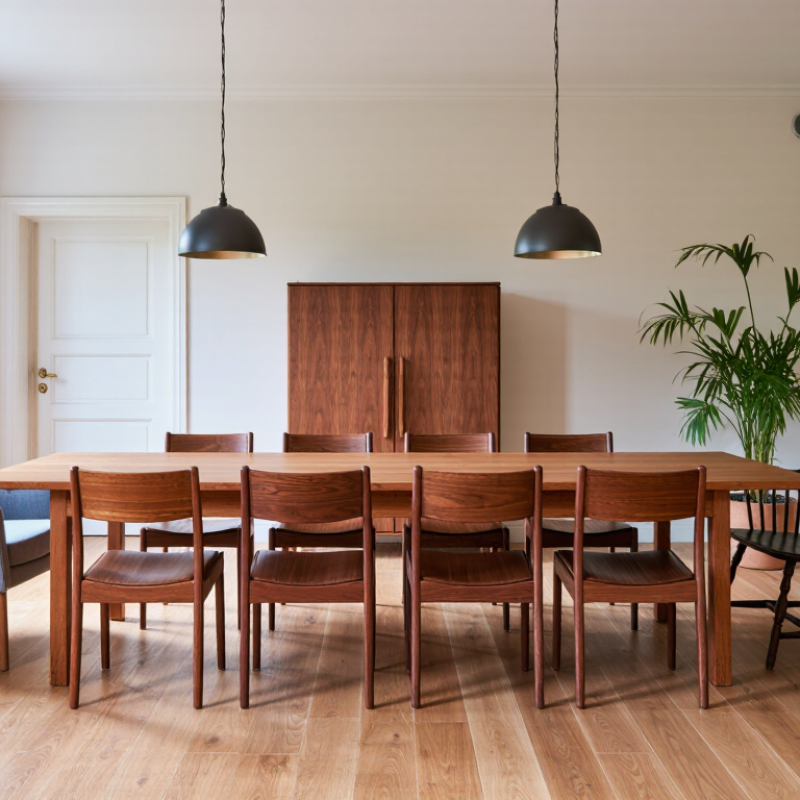
The right dining chairs do more than fill the spaces around a table. They shape how a room feels, how comfortably guests linger, and how easily everyday meals unfold. A low-backed wooden chair can keep a small dining area feeling open, while a padded armchair may make a larger table feel more inviting. Small details matter: seat height, back support, fabric texture, and the sound of chair legs sliding across the floor.
Danish furniture designer Hans J. Wegner is often quoted as saying, “A chair is only finished when someone sits in it.” It is a useful reminder when comparing dining chairs. Style matters, but comfort becomes clear only after a real meal, not a quick glance in a showroom. That part is easy to overlook. This guide explores popular types, including side chairs, armchairs, upholstered chairs, Windsor chairs, and benches, with practical notes on their strengths and trade-offs. Some suit formal dining rooms; others handle busy kitchens better. There is no perfect choice for every home, and even a beautiful chair may feel wrong after an hour at the table. Look closely, sit down, and consider how the chair will work with your table, floor, and daily routine.
How Dining Chairs Are Classified by Frame, Arms, Back, and Upholstery
What Are the Top Types of Dining Chairs?
Dining chairs are easiest to compare by four features: frame, arms, back, and upholstery. A solid-wood frame feels substantial and can show joints and grain; metal frames often look visually lighter. Neither is automatically more durable. Check how the chair is joined, whether it rocks on a level floor, and how its finish handles daily contact. The market is large: Grand View Research valued the global home furniture market at about USD 220.9 billion in 2022. That broad category includes much more than dining chairs, but it shows why construction and material choices matter across furniture buying.
Armless side chairs slide neatly under a table, while armchairs need extra elbow and clearance space. Measure before choosing. A ladder-back chair has horizontal rails; a slat or spindle back leaves more open space, while an upholstered back feels softer against the shoulders. Small detail. It matters. Upholstery changes both comfort and upkeep: woven fabric can feel warm, but textured surfaces may hold crumbs; leather-like materials wipe clean, though they can feel cool. For regular meals, inspect seams and ask about cleaning instructions and abrasion-test results. I find these categories useful, but not perfect: a curved back can matter more than its label, and a beautiful seat may prove uncomfortable after a long dinner.
What Are the Top Types of Dining Chairs? — How Dining Chairs Are Classified by Frame, Arms, Back, and Upholstery
| Chair Type | Frame | Arms | Back | Typical Upholstery | Common Characteristics |
|---|---|---|---|---|---|
| Side Chair | Wood, metal, or molded material | Usually armless | Varies: solid, slatted, ladder, or upholstered | Unupholstered seat or padded seat; some have upholstered backs | A versatile dining chair without arms, often easy to fit around a table. |
| Armchair | Wood, metal, or a combination of materials | Armrests are built into or attached to the frame | Varies by design; may be open or upholstered | Ranging from a bare seat to fully upholstered | Provides arm support and generally needs more space than an armless chair. |
| Upholstered Parsons Chair | Typically a concealed wood frame | Most often armless; arm versions are also made | Upright, padded, and usually simply shaped | Fabric, leather, or synthetic upholstery over a padded seat and back | Recognized by its clean lines and covered frame; upholstery can extend to the legs or lower frame. |
| Ladder-Back Chair | Usually a wooden frame | Often armless; arm versions exist | Horizontal rails between the side uprights create a ladder-like appearance | Commonly a wood seat; some versions have a padded or woven seat | The open rail back gives the chair a lightweight appearance and visible structure. |
| Windsor-Style Chair | Traditionally a wooden frame with a solid seat and separate back components | Available with or without arms | Typically has a shaped top rail and spaced spindles | Usually an exposed wood seat; cushions may be added | Its characteristic spindle back and shaped seat distinguish it from fully upholstered designs. |
| Slat-Back Chair | Commonly wood; also made with other rigid materials | Usually armless, with some armchair versions | One or more broad horizontal slats | Often an exposed seat; padded seat options are common | A practical open-back design with horizontal supports across the back. |
| X-Back Chair | Often wood, with crossed back supports | Usually armless; arm versions are available | Back supports form an X shape | Often a wood or woven seat; cushions may be used | The crossed back is a defining visual feature; the seat and frame materials vary. |
| Fully Upholstered Dining Chair | Usually a concealed wood or metal frame | May be armless or have upholstered arms | Padded and covered, with a range of shapes and heights | Fabric, leather, or synthetic upholstery on both seat and back | Offers padding across the main seating surfaces; construction and cushioning vary by model. |
| Slipcovered Dining Chair | Typically a wood frame beneath a removable cover | May be armless or have covered arms | Usually padded, with a fabric cover fitted over the chair | Removable or replaceable fabric slipcover over the seat and often the back | The cover can be removed for care or changed, subject to the fabric’s cleaning instructions. |
| Cantilever Chair | Often a continuous metal tube or other rigid frame that supports the seat without rear legs | May be armless or include arms | May be a rigid frame, mesh, or upholstered panel | May be unupholstered, padded, or fully covered | The cantilevered frame supports the seat from the sides and can flex slightly under load. |
| Woven-Seat Chair | Often a wood or metal frame | Usually armless; arm versions exist | May be slatted, spindle-backed, or upholstered | Seat woven from materials such as cane, rush, or cord; cushions may be added | The woven seat provides a distinct surface and appearance; care needs depend on the material. |
| Bench-Style Dining Chair | Wood, metal, or a combination | Usually armless | May have a low back, a full back, or no back | Can be bare, padded, or upholstered | A wider seat accommodates more than one person, depending on its dimensions and design. |
Note: These categories can overlap. A dining chair may, for example, be both an armchair and a fully upholstered chair, or combine a wooden frame with a woven seat.
Related Posts
-
2026 Top Dining Room Chairs for Wholesale Buyers?
-

5 Innovative Tips for Choosing Dining Room Chairs that Enhance Comfort and Style
-
Top 10 Dining Room Chairs for Every Home Style?
-

Best Dining Tables and Chairs for Stylish Interiors and Comfortable Dining
-
What Are the 2026 Best Types of Black Dining Room Chairs?
-
How to Choose the Perfect Kitchen Chairs for Your Home Style