2026 Top Dining Room Chairs for Wholesale Buyers?

Wholesale buying in 2026 demands more than attractive photographs and low unit prices. Dining room chairs must support daily use, match current interiors, and arrive consistently across large orders. Buyers should examine frame construction, seat comfort, fabric performance, finish quality, packaging, and replacement support before approving a supplier.

This guide explores leading chair styles for restaurants, hospitality projects, retailers, and furniture distributors. It considers practical details, including stackability, carton protection, assembly time, weight capacity, and cleaning requirements. A solid beech frame may suit a warm dining concept, while powder-coated steel can better support busy commercial spaces. Upholstered chairs may improve comfort, but their care instructions deserve close attention.

Looks can mislead.

Reliable selection also requires supplier verification. Request material samples, inspection reports, product specifications, and clear warranty terms. Compare production capacity with your expected order volume. Small inconsistencies in stitching, welds, stain color, or leg alignment can become expensive after delivery. Experience shows that the cheapest quote is not always the lowest total cost.

Still, no ranking fits every wholesale buyer. A fashionable silhouette may perform poorly in crowded dining rooms. A durable chair may feel too heavy for retail customers. Market trends change quickly, and some predictions will miss the mark. Therefore, this overview balances design appeal with measurable performance, helping buyers create a more informed shortlist for 2026.

2026 Top Dining Room Chairs for Wholesale Buyers?

What Defines a Top Dining Room Chair in 2026?

A top dining room chair in 2026 must balance comfort, durability, and responsible material choices. Wholesale buyers now need evidence, not attractive photographs alone. CSIL’s World Furniture Outlook 2025 places global furniture consumption above US$1 trillion, increasing pressure for reliable, repeatable quality. A chair should feel stable after repeated use, with even joints, smooth edges, and consistent dimensions across every carton.

Performance matters. BIFMA testing principles emphasize structural strength, stability, and durability for commercial seating. Buyers should request test records, load ratings, and sample inspections before placing large orders. Seat height near 45–48 centimeters supports most dining tables. Medium-firm cushioning usually performs better than soft foam, which can flatten quickly in restaurants and rental properties. Solid wood can look premium, but moisture movement still needs attention. That detail is often missed.

Tips: Sit on a sample for ten minutes. Check wobble, stitching, odor, and floor protection. Ask how recycled content is verified, not merely advertised. Compare packaging damage rates from previous shipments. A 2024 report from the United Nations Environment Programme stresses the importance of longer product life and circular material use, yet sustainability claims remain difficult to compare. Buyers should record defects, returns, and customer feedback after delivery. Perfection is unlikely. Better purchasing comes from measurable lessons.

Which Chair Materials and Styles Suit Wholesale Markets?

For wholesale dining markets, material choice starts with use, not appearance. Solid wood gives warmth, repairability, and a familiar residential feel. It can also vary in color, moisture response, and grain. Buyers should request kiln-drying details, joint samples, and finish testing before placing large orders. A chair that looks stable in a showroom may loosen after repeated movement. That happened in one trial. The lesson was simple: inspect the joints, not only the photograph.

Metal frames suit busy restaurants, rental projects, and compact storage systems. Powder-coated steel resists everyday scuffs when the coating is applied correctly. Aluminum reduces weight, but thinner sections may feel less substantial. Test seat flex, weld quality, edge finishing, and stacking height. Plastic and molded composite chairs offer consistent color, easy cleaning, and efficient shipping. Yet low-grade surfaces can scratch quickly under rough handling. Request abrasion data and a few cartons for transport checks. Packaging matters.

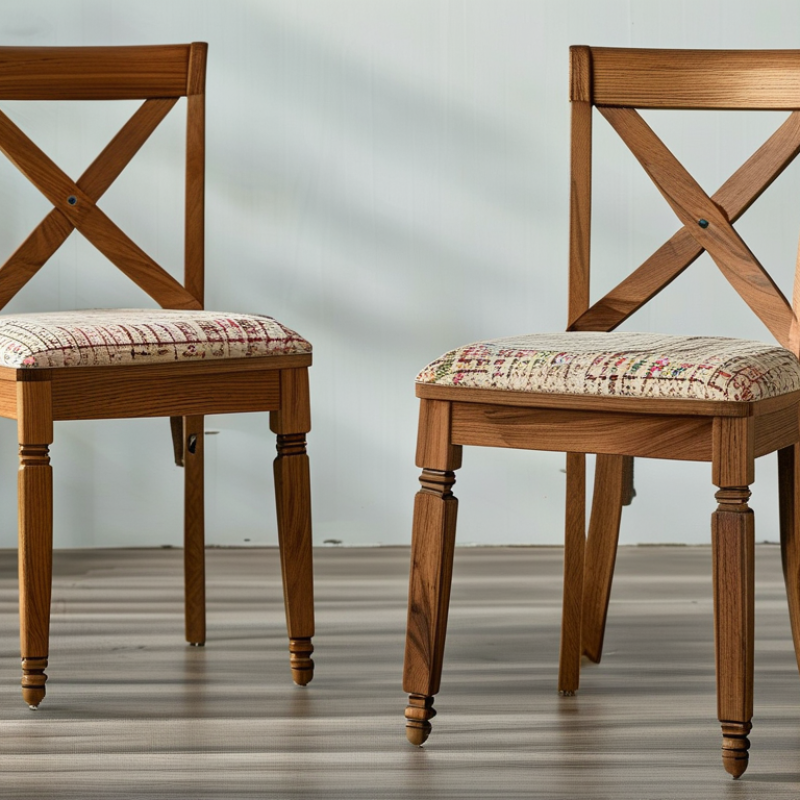
Style should match the wholesale channel. Ladder-back and spindle designs fit casual dining and farmhouse-inspired interiors. Upholstered seats add comfort, but fabric selection becomes a maintenance decision. Performance textiles, removable covers, and darker tones often reduce service concerns. Minimal sled or bentwood silhouettes can suit modern projects and nest efficiently. Trends change faster than replacement cycles. Do not overbuy a fashionable profile. Review lead times, spare-part access, carton dimensions, and load-test records with each supplier. A balanced assortment may include one expressive style and several dependable workhorses.

How Should Buyers Compare Comfort and Durability?

For 2026 wholesale dining room chairs, comfort and durability should be tested together. A chair may look strong but still create pressure behind the knees. Buyers should inspect the seat height, depth, back angle, and edge shape. A slightly flexible back can support longer meals better than a rigid frame.

Test every sample on a firm floor. Sit for ten minutes, then change posture several times. Check whether the seat compresses evenly and returns to its original shape. Small details matter. Smooth edges reduce contact wear on clothing and skin. Stable joints should not creak when the chair is lifted, turned, or placed down.

Durability needs practical evidence, not attractive specifications alone. Review the frame material, joint construction, surface coating, and replacement process. Scratch-resistant finishes are useful in busy dining areas, but no coating stays perfect forever. That is worth admitting. Ask suppliers for load testing, cycle testing, and cleaning guidance. Repeated wiping can weaken poor finishes. Also examine packaging, because hidden shipping damage can reduce usable inventory. Buyers should compare comfort after repeated use, not only during a showroom visit. A chair that feels excellent for two minutes may become tiring after a full dinner service.

What Specifications and Certifications Matter Most?

2026 Top Dining Room Chairs for Wholesale Buyers?

For wholesale buyers, chair specifications should begin with use, not appearance. Confirm seat height, overall width, stackability, and certified weight capacity. A 45-centimeter seat often suits standard dining tables, but local table heights can differ. Ask for dimensional drawings, not marketing estimates. Materials also deserve close inspection. Solid wood needs moisture control, while plywood requires consistent thickness and sealed edges. Powder-coated steel should show even coverage around joints. Small details matter.

Certifications and test reports reveal production discipline. FSC documentation can support responsible wood sourcing when timber is included. GREENGUARD Gold may help verify lower chemical emissions for indoor environments. BIFMA performance standards can guide strength and durability testing, although compliance is not always a legal certification. In Europe, EN 12520 and EN 16139 may apply to seating strength and durability. Request current reports, laboratory details, and matching product codes. A factory’s ISO 9001 system can also indicate controlled processes, but it does not guarantee every shipment is perfect.

Wholesale buyers should also check fire-performance requirements for the destination market. Upholstery fabric, foam, and adhesives may need separate documentation. Request abrasion results, colorfastness data, carton drop tests, and inspection records from the same production batch. Sample approval is useful, but one sample cannot expose every weakness. I have seen attractive chairs fail at loose joints after repeated movement. That risk deserves a written corrective plan, not a casual promise.

2026 Top Dining Room Chairs for Wholesale Buyers: What Specifications and Certifications Matter Most?

Practical procurement benchmarks for residential, hospitality, restaurant, and contract dining-chair programs

Evaluation Area Recommended Wholesale Specification Relevant Certification, Standard, or Evidence Why It Matters for Buyers
Intended Use Classification Select a documented use category:
Residential Hospitality Restaurant Contract
Ask for a test report that identifies the chair type, test method, sample quantity, and pass/fail result. A dining chair designed for occasional household use may not withstand the repeated loading, cleaning, and handling found in restaurants or hospitality projects.
Seat Height Approximately 450–480 mm from finished floor to the compressed seat surface for standard dining tables. Dimensional inspection report or approved production drawing. Compatible seat height improves dining posture and reduces complaints caused by poor clearance between the chair and table.
Overall Chair Size Typical compact dining footprint: about 450–550 mm wide and 500–600 mm deep. Confirm the actual packed and assembled dimensions. Production drawing with dimensional tolerances, usually stated in millimetres. Accurate dimensions support table planning, floor layouts, carton planning, container utilization, and e-commerce listings.
Seat Width and User Comfort Prefer a clear usable seat width of approximately 430–480 mm, subject to the chair silhouette and arm design. Dimensioned drawing and sample approval using a representative production unit. Adequate usable width supports broader customer acceptance without creating unnecessary shipping volume.
Load Capacity Set a stated user-weight rating of at least 136 kg / 300 lb for general wholesale programs; use a higher project requirement where specified. Strength and durability test report. The stated user rating must not be confused with the laboratory test load. A clear rating helps buyers match the product to the project, communicate safe use, and reduce warranty disputes.
Structural Strength and Durability Require testing appropriate to the intended market and usage frequency, including seat, back, leg, joint, and stability checks. EN 12520 Domestic seating
EN 16139 Non-domestic seating
ANSI/BIFMA X5.4 Public and lounge seating where applicable
These standards provide recognized methods for evaluating strength, durability, and safety. The correct standard depends on chair design and market.
Stability and Tip Resistance Require stable four-leg or pedestal geometry, level feet, and no excessive rocking after assembly. Stability results within the applicable seating standard, plus a pre-shipment inspection checklist. Stability is a core safety issue and is especially important for hard floors, commercial dining areas, and high-frequency use.
Frame Material Specify the exact material and construction, such as solid wood, plywood, steel tube, aluminium, or a mixed frame. Define wall thickness or board thickness where relevant. Material declaration, incoming-material records, and production inspection report. Material transparency helps buyers compare strength, weight, repairability, moisture performance, and cost without relying only on appearance.
Wood and Panel Products Require traceable wood species and documented moisture control. For composite panels, specify low-emission or legally compliant panels for the destination market. FSC Chain of Custody
TSCA Title VI CARB Phase 2
FSC supports responsible forest-material claims when the complete supply chain is covered. TSCA Title VI and CARB Phase 2 address formaldehyde emissions from regulated composite wood products.
Adhesives, Coatings, and Odour Use controlled adhesive and coating systems with documented curing conditions. Set an acceptance limit for abnormal odour after unpacking. Safety Data Sheets, coating technical data, batch records, and optional chamber-emission testing. Low-odour, well-cured finishes improve indoor acceptance and reduce returns caused by perceived quality problems.
Indoor Air Emissions For residential, office-adjacent, healthcare, or green-building projects, prioritize independently tested low-emitting assemblies. GREENGUARD Gold
Valid product certification and current certificate scope must be checked.
GREENGUARD Gold is a product-emissions certification with stricter limits intended for sensitive indoor environments. It is not automatically applicable to every finish or configuration.
Upholstery Textile Safety Define fabric composition, abrasion requirement, colourfastness, pilling performance, seam strength, and cleaning method. OEKO-TEX STANDARD 100
Textile test report for the actual fabric or certified article.
OEKO-TEX STANDARD 100 evaluates textiles for harmful substances. It does not replace durability, fire, abrasion, or furniture-performance testing.
Commercial Upholstery Durability For restaurants and hospitality, specify a project-appropriate abrasion target, commonly around 30,000–50,000 double rubs when the project or textile supplier uses that method. Fabric supplier test report stating the test method, result, fabric construction, and lot or article reference. Abrasion results are useful for comparison, but test methods are not always directly interchangeable; cleaning chemicals and seam construction also affect service life.
Fire and Flammability Requirements Identify the destination-country and project-specific requirement before production, especially for upholstered seating. TB117-2013
California upholstered-furniture smoldering test where applicable
Applicable local or national regulations for the destination market
TB117-2013 is a test standard, not a universal global certification. Compliance must be verified against the regulations and contract requirements of the destination market.
Finish and Chemical Compliance Document paint, stain, lacquer, powder-coat, plating, and cleaning-chemical resistance requirements for the intended environment. Safety Data Sheets, restricted-substance declaration, and finish-performance test reports where required. Clear chemical documentation helps support customs, retailer, hospitality, and environmental compliance reviews.
Floor Protection Use replaceable felt, rubber, nylon, or other suitable glides matched to wood, tile, stone, vinyl, or carpet flooring. Glide material specification, pull-drag inspection, and replacement-part availability. Proper glides reduce scratching, noise, uneven movement, and after-sales claims from commercial or residential flooring damage.
Assembly and Fasteners Minimize assembly steps; specify thread-locking or locking hardware where appropriate. Include torque values and illustrated instructions. Assembly instruction, torque specification, fastener bill of materials, and inspection record. Consistent assembly is essential for maintaining chair alignment, stability, and test performance across large wholesale shipments.
Quality-Control Plan Use approved samples, first-article inspection, in-line checks, final inspection, and carton drop or packaging checks. Inspection level, acceptance criteria, defect classification, inspection photos, and signed release report. A documented quality plan converts subjective appearance expectations into measurable purchasing conditions.
Packaging and Container Efficiency Record assembled dimensions, knock-down dimensions, carton size, net weight, gross weight, and units per carton. Target packaging that protects corners, legs, and upholstery. Packaging specification, carton-marking layout, pallet plan, and pre-shipment packing test. Packaging directly affects freight cost, damage rates, warehouse handling, and the total landed cost per chair.
Traceability and Documentation Use lot or batch identification for frame materials, upholstery, finishes, production date, and shipment cartons. Material declarations, test reports, certificates, inspection records, care instructions, and warranty terms. Traceability enables faster claims investigation, controlled recalls, repeat-order consistency, and more reliable compliance audits.
Warranty and Spare Parts Define the commercial warranty period, exclusions, replacement-part policy, and availability of glides, screws, seats, and covers. Written warranty document and spare-parts list linked to the product code or configuration. Repairable products can lower total cost of ownership and reduce replacement waste for wholesale and contract customers.
Pre-Order Approval Gate Approve a production sample only after dimensions, comfort, finish, colour, stability, packaging, labels, and documentation meet the purchase specification. Signed golden-sample approval, approved colour swatches, and a configuration-specific compliance file. The final approved sample becomes the reference point for bulk production and helps prevent silent material or construction substitutions.

How Can Buyers Evaluate Suppliers, Prices, and Order Terms?

Wholesale buyers should evaluate dining-chair suppliers beyond catalogue photos. Statista Market Insights estimates global furniture revenue will reach about US$766 billion in 2025, increasing pressure on cost and delivery control. Ask each supplier for factory ownership details, monthly capacity, material specifications, and recent quality records. A third-party factory audit is useful, but it is not perfect. Visit, when possible.

Compare landed cost, not only the quoted chair price. Include packaging, inspection, inland transport, duties, payment fees, and expected defect replacement. The U.S. Census Bureau reported that e-commerce represented 15.6% of total retail sales in 2023. Buyers should therefore request carton dimensions, barcode options, and damage-rate evidence for online distribution. Small packaging changes can protect margins.

Order terms deserve equal attention. Request a pre-production sample, written tolerances, and a defined inspection standard. Clarify whether deposits, balance payments, tooling, and spare parts are refundable or negotiable. The World Bank’s 2023 Logistics Performance Index shows clear differences in customs, infrastructure, and shipment tracking across supplier countries. Use those differences in lead-time planning. A low quote may hide a long delay. I would also test several chairs personally, including uneven floors and repeated loading. Comfort is subjective, and one sample cannot represent an entire shipment.

The Health & Safety of our Community is Our Priority For this reason, we will be changing our business hours to:

MON - SAT 12pm - 5pm

Or by appointment

We will communicate any updates through our social media and other regular mediums. Thank you for being a loyal customer!

Learn More

Top The owner of this website has made a commitment to accessibility and inclusion, please report any problems that you encounter using the contact form on this website. This site uses the WP ADA Compliance Check plugin to enhance accessibility.