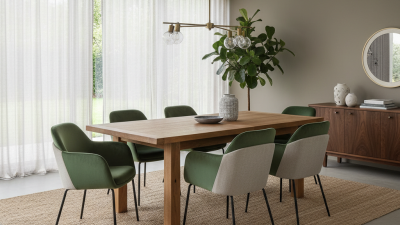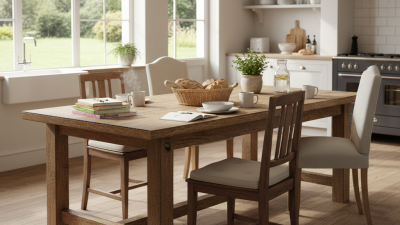
Why choose dining room furniture for global buyers? The answer reaches beyond appearance. A dining table becomes the center of family meals, business discussions, celebrations, and quiet evening routines. Buyers therefore need furniture that combines visual appeal, dependable construction, practical sizing, and lasting comfort.
Charles Eames, a respected furniture designer, famously said, “The details are not the details. They make the design.” This idea matters when selecting dining room furniture for international markets. Smooth table edges, stable joints, easy-clean finishes, and supportive chairs can influence customer satisfaction. A difference of two centimeters may affect comfort in a compact apartment. A poorly protected corner may create damage during transportation.
Global buyers also examine material quality, production consistency, packaging, and responsible sourcing. Solid wood can offer warmth and durability, while engineered materials may improve affordability and dimensional stability. Neither option is perfect. Wood can vary in color, and lower-cost finishes may wear faster than expected. Honest product descriptions are essential.
Reliable suppliers should provide clear dimensions, material information, care instructions, and quality-control evidence. They should also understand the needs of different homes, climates, and hospitality spaces. A Nordic dining set may suit a bright, minimal interior, while a darker design may feel more natural in a traditional dining room. Preferences differ widely.
The strongest buying decision balances beauty with evidence. Dining room furniture should look inviting on day one and remain useful years later. That standard is demanding, but it protects both global buyers and the people who use the furniture every day.
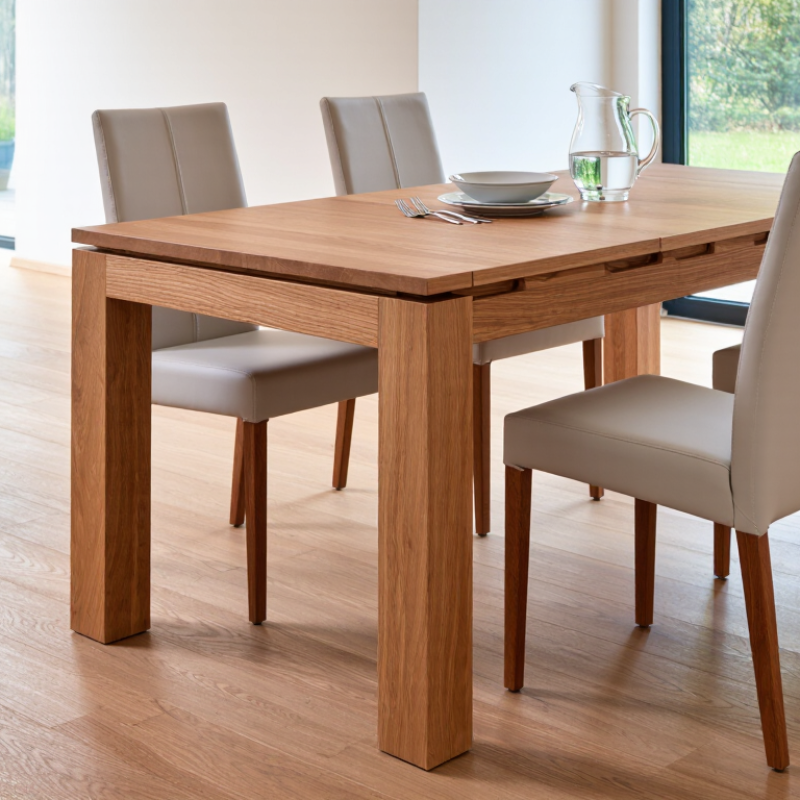
Global buyers look for dining room furniture that fits real homes, not only attractive showroom displays. Fit comes first. A table should leave enough space for chairs, walking paths, and everyday movement. Buyers often check exact dimensions, tabletop thickness, leg placement, and extension methods before ordering. In smaller apartments, a round table may improve circulation. In larger homes, a solid rectangular table can support shared meals and work.
Materials also matter across different climates. Buyers may ask whether wood is kiln-dried, whether joints are reinforced, and how finishes resist moisture or heat. I have found that clear care instructions build more confidence than decorative claims. Packaging is equally important. Corner protection, moisture barriers, and readable assembly guides can reduce damage during long-distance delivery. Still, packaging is not perfect. Heavy protection may increase waste and shipping costs.
Reliable buyers also examine safety, durability, and responsible production. They may request test records, material information, load guidance, and compliance documents for their market. A stable chair should not wobble on a hard floor after repeated use. A smooth finish should not release unpleasant odors in a closed dining room. Repairable parts, replaceable hardware, and consistent sizing can support long-term ownership. Price remains important, but the cheapest option may create higher costs through returns, repairs, or early replacement. That lesson is easy to overlook.
Dining room furniture serves global buyers when materials, dimensions, and construction meet varied household needs. Solid hardwood offers strength, while engineered wood can improve stability in humid climates. Many buyers prefer responsibly sourced timber with clear documentation. Surface finishes also matter. A low-odor, durable coating helps protect tables from spills and repeated cleaning.
Construction quality is equally important for international markets. Mortise-and-tenon joints, reinforced corners, and properly aligned metal fittings reduce movement over time. Dining chairs should support balanced weight distribution without sharp edges or loose components. Tables need level legs, smooth undersides, and reliable extension mechanisms. Packaging should protect corners and hardware during long-distance shipping. In practice, even good designs can fail when assembly instructions are unclear. That detail deserves more attention.
Tips: Request material samples before placing a large order. Test the finish under warm dishes and light moisture. Check whether fasteners resist corrosion in coastal regions. Confirm seat height, table height, and carton dimensions together. Small mismatches become expensive overseas.
International buyers should also review moisture content, load testing, and quality-control records. Consistent inspection is more trustworthy than attractive product photography. A practical supplier shares inspection methods, tolerances, and replacement procedures openly. Specifications may need adjustment for local homes, elevators, and dining habits. Not every standard fits every market. That is where careful communication becomes essential.
A practical comparison of materials, construction features, and commonly referenced international requirements for dining tables and chairs.
| Data Dimension | Material or Construction Option | Typical Technical Data | Relevant Standard or Reference | International Buyer Value |
|---|---|---|---|---|
| Solid Wood | Oak, beech, rubberwood, ash, or other responsibly sourced hardwoods | Common furniture moisture target: approximately 8–12%, adjusted for the destination climate | EN 13183-1 for wood moisture measurement; ISO 13061-1 for wood moisture content testing | Proper moisture control helps reduce cracking, warping, shrinkage, and joint movement during overseas transport and seasonal use. |
| Engineered Wood | MDF, particleboard, plywood, or wood veneer panels | Typical panel density varies by product; MDF is commonly around 650–800 kg/m³, while particleboard is commonly around 600–750 kg/m³ | EN 622 series for fibreboards; EN 312 for particleboards; EN 636 for plywood | Engineered panels provide consistent dimensions, efficient material use, and stable surfaces for veneer, laminate, or paint finishes. |
| Formaldehyde Emissions | Low-emission wood-based panels and finished furniture components | Emission classification should be confirmed through laboratory reports for the exact panel or finished product | EN 717-1 for chamber testing; U.S. EPA TSCA Title VI and CARB Phase 2 requirements for applicable composite wood products | Documented emissions performance supports compliance with indoor-air-quality requirements in major importing markets. |
| Metal Frames | Powder-coated steel, stainless steel, or aluminum bases and legs | Steel provides high structural stiffness; aluminum reduces weight; stainless steel offers stronger corrosion resistance than ordinary carbon steel | ISO 9227 for salt-spray testing; ISO 12944 for corrosion-protection systems; coating specifications should be agreed by contract | A defined coating system and corrosion test method help protect furniture during humid storage, coastal delivery, and long-term indoor use. |
| Glass Components | Tempered clear, tinted, or textured safety glass for tabletops and inserts | Tempered glass is heat-treated to improve strength and breakage safety; edge finishing remains essential | EN 12150-1 for thermally toughened soda-lime silicate safety glass; ANSI Z97.1 for safety glazing in the United States | Safety-glass documentation and controlled packaging reduce injury risk and transit damage claims. |
| Table Stability | Wide leg stance, reinforced aprons, cross-bracing, and adjustable leveling feet | Stability depends on table height, footprint, center of gravity, fastener design, and applied load | EN 12521 for domestic tables; EN 1730 for test methods for strength, durability, and stability | Verified stability is important for family dining, hospitality projects, and markets where safety documentation is requested. |
| Chair Strength | Mortise-and-tenon, dowel, metal-bracket, or reinforced screw construction | Load capacity should be declared only after testing the complete chair design, including joints, seat, back, and base | EN 12520 for strength, durability, and safety requirements for domestic seating; EN 1728 for test methods | Full-chair testing gives buyers a more reliable indication of service life than judging the frame material alone. |
| Upholstery | Polyester, cotton blends, leather, or coated fabrics over foam or fiber filling | Performance should be assessed for abrasion, seam strength, colorfastness, and cleanability according to the intended use | EN ISO 12947 for textile abrasion; ISO 105-B02 for colorfastness to artificial light; EN 1021-1 and EN 1021-2 for cigarette and match-flame ignition behavior | Test selection should reflect residential, restaurant, hotel, or contract use rather than relying on a single fabric specification. |
| Surface Finishing | Water-based lacquer, UV coating, oil, wax, powder coating, or laminate | Important characteristics include adhesion, resistance to liquids, scratches, abrasion, and household chemicals | ISO 2409 for coating adhesion; ISO 2813 for gloss measurement; EN 438-2 for high-pressure decorative laminate testing | Consistent finish testing helps compare products from different production regions and supports predictable maintenance requirements. |
| Hardware and Joints | Bolts, threaded inserts, cam fittings, concealed brackets, and replaceable fasteners | High-quality joints should resist loosening, support repeated assembly, and allow access for maintenance | EN 1730 and EN 12521 provide relevant table durability and strength testing references | Knock-down construction can reduce shipping volume, while replaceable hardware improves repairability in overseas markets. |
| Packaging and Transport | Corrugated cartons, molded pulp, expanded foam, corner protection, and moisture barriers | Packaging should protect edges, glass, finished surfaces, and hardware against vibration, compression, and humidity | ISTA test procedures are commonly used for packaged-product distribution testing; ISPM 15 applies to regulated solid-wood packaging materials | Transit-tested packaging can reduce breakage, replacement costs, and customs or quarantine delays. |
| Sustainable Sourcing | Recycled materials, certified wood, repairable components, and recyclable packaging | Claims should be supported by traceable documentation and should identify the material, scope, and applicable product components | FSC chain-of-custody certification may be used for eligible forest-based materials; ISO 14021 covers self-declared environmental claims | Transparent sourcing information helps buyers meet procurement policies without relying on unverified environmental statements. |
| Dimensional Consistency | Controlled machining, calibrated assembly fixtures, and final inspection | Critical checkpoints include tabletop flatness, leg alignment, chair rocking, hole position, and overall dimensions | Use documented inspection plans and agreed tolerances; applicable product testing may reference EN 1730 or EN 1728 | Consistent dimensions simplify installation, multi-unit purchasing, replacement ordering, and quality acceptance across borders. |
Global buyers rarely seek one universal dining room style. They need furniture that respects local habits, room sizes, and daily rituals. In project reviews, I have seen narrow tables succeed in urban apartments but fail in family dining rooms. Context matters. A round table can encourage conversation, while an extendable rectangular table supports larger gatherings. The choice should follow real use, not showroom fashion.
Cultural preferences often appear in material, color, and proportion. Warm wood tones may suit homes that value natural textures and visible craftsmanship. In other markets, lighter finishes and slimmer legs can make compact rooms feel more open. Some households prefer firm dining chairs for long meals; others want padded seats for extended hospitality. Seat height, table clearance, and cleanable surfaces deserve careful measurement. Small details matter. A two-centimeter mismatch can affect comfort every evening.
Adaptable collections should offer several sizes, neutral foundations, and replaceable components without losing visual harmony. Local distributors can test samples with homeowners, interior professionals, and hospitality users before larger orders. This creates evidence. I learned this after approving a finish that looked refined under showroom lights but showed fingerprints easily. The decision was not perfect. Reviewing such mistakes improves specifications, care guidance, and quality checks. Reliable sourcing also requires documented materials, stable construction, accurate dimensions, and packaging suited to long-distance handling. Designers should leave room for regional interpretation, because cultural identity cannot be reduced to a color chart.
Why Choose Dining Room Furniture for Global Buyers?
Dining room furniture supports daily movement, not just formal meals. In project reviews, I begin with the household size, serving route, and chair clearance.
The 2023 American Community Survey reports an average U.S. household size of about 2.6 people. That figure challenges the old assumption that every home needs a large dining suite. A compact table may serve better, especially in apartments and mixed-use rooms.
Space matters. The National Kitchen and Bath Association recommends about 36 inches for comfortable circulation around furniture. For active serving zones, wider clearance is safer and more practical.
A round table can soften tight corners, while an extendable table handles occasional guests without occupying daily floor space. Storage should also match behavior. Shallow cabinets can hold plates and linens without blocking door swings.
Small details change usability. Seat height, table thickness, and leg placement affect knee space. According to the 2024 Houzz & Home Study, homeowners continue investing in improvements that make rooms more functional and adaptable.
The report focuses on renovation spending, but its message applies to furniture planning: flexibility has measurable value. I still see buyers choose oversized tables for appearance. It often creates narrow paths and unused corners.
Measure twice. Then question the plan. A beautiful room can still work poorly when six chairs compete with one doorway.
For global buyers, dining room furniture is judged beyond appearance. Quality begins with materials, joinery, finish, and packaging. A solid wood table should show stable grain, tight joints, and a level surface. Chairs need tested load strength, comfortable angles, and smooth edges. In supplier discussions, ask for material specifications, moisture guidance, inspection photos, and sample approval. Small details matter. A beautiful finish can still hide weak assembly.
Cost is rarely the unit price alone. Buyers must calculate tooling, protective packaging, inland transport, freight, insurance, duties, and possible storage charges. Currency changes can disturb a carefully planned margin. Larger orders may reduce production cost, yet they can increase inventory risk. Compare quotations by the same specifications, not by totals only. Request clear delivery terms and a written defect policy. An experienced purchasing team also checks production capacity during busy seasons. Cheap furniture becomes expensive when replacement parts arrive late.
International decisions also depend on documentation and communication. Confirm dimensions in metric units, carton marks, care instructions, and required safety test reports. Local climate deserves attention; dry air may affect wood, while humidity can damage untreated panels. Samples reveal more than digital images, although one sample cannot predict every production variation. That limitation is easy to overlook. Buyers should record inspection criteria before payment milestones. Keep room for correction. The most reliable process allows questions, independent checks, and honest review of what went wrong.
Factors Influencing Quality, Cost, and International Purchasing Decisions
The World Bank Logistics Performance Index (LPI) measures customs, infrastructure, international shipments, logistics competence, tracking, and timeliness on a 1–5 scale. Stronger logistics performance can reduce delivery uncertainty, damage risk, and landed-cost pressure when buyers source dining room furniture internationally. Source: World Bank, Logistics Performance Index 2023.